By Roy Billington
Born October 15, 1858 in Boston, Massachusetts, John L Sullivan became the unlikely first king of boxing in the United States of America. SullivanÂ’s life was complex, a story encompassing numerous high points as well as cataclysmic lows. One thing is for certain, without John L the rise of prize fighting, as one of the nationÂ’s favorite pastimes, wouldnÂ’t have been so smooth.
The story of John L Sullivan begins far from the streets of Boston, which he later ruled. SullivanÂ’s fighting roots can be traced back to Ireland, the country that his parents fled during the Irish potato famine. IrelandÂ’s history of producing bareknuckle fighters is unrivalled so it should come as no surprise that when John L entered adolescence, the fighting spirit that was in his DNA came to the forefront. As a youth, Sullivan, a resident of South Boston, got himself into trouble with the law for fighting when the sport was still illegal.
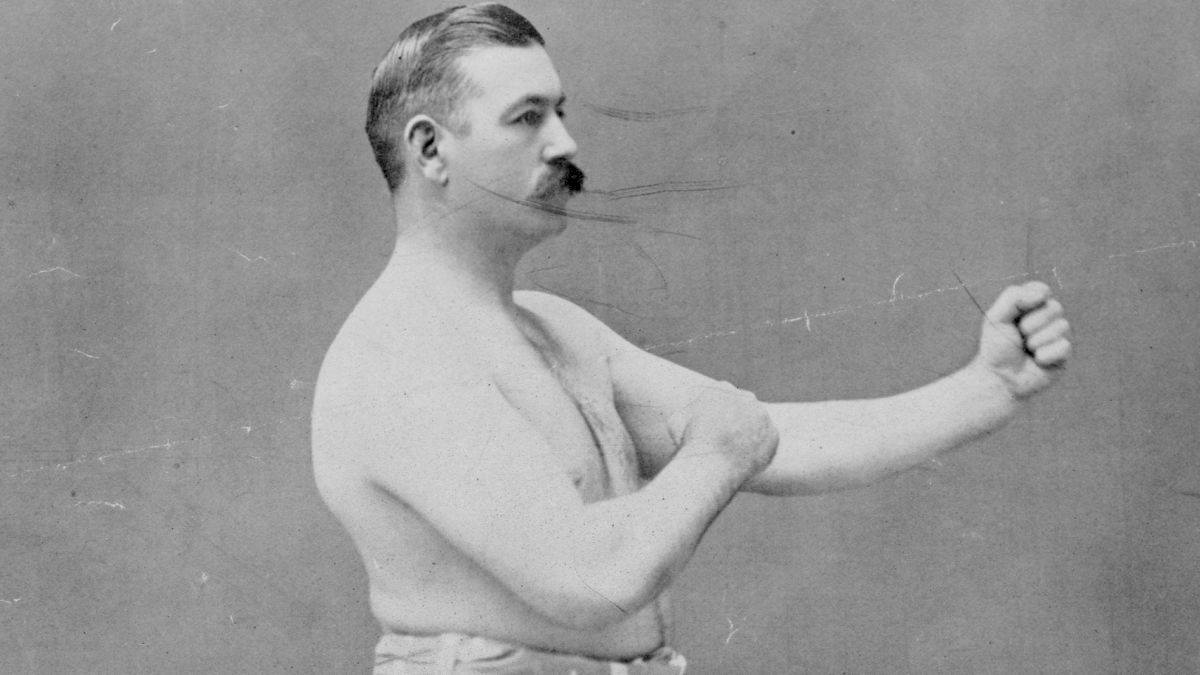
Through SullivanÂ’s transition from a brash teenager to a mustached-man, it became apparent that the life of prize fighting was what he was destined for. A turning point came for Sullivan in 1878 when he decided to leave Boston College to dedicate his life to fighting, touring America and challenging all-comers to fights.
SullivanÂ’s earlier years on the road proved financially fruitful, the heavy-handed Irish-American fought an amazing amount of fights against local fighters and began to develop a fan base from the get go. In the era of bareknuckle boxing, Sullivan was an anomaly, Sullivan preferred to fight wearing gloves as he felt that gloved-opponents would be less able to clinch and wrestle, which was a common issue during bareknuckle fights.
SullivanÂ’s early pro fights all took place in his hometown of Boston and with each devastating knockout victory, his name spread throughout the largely impoverished-immigrant communities, which saw SullivanÂ’s success as a momentary distraction to the horrors they had witnessed before being forced to leave their native land in pursuit of the American dream.
With his success and meteoric rise to the top, Sullivan was soon introduced to the dark side of fame. Over the early 1880’s, the “Boston Strong Boy” developed a fondness for alcohol, which would plague him for the majority of his adult life and would be the cause of an embarrassing performance against Paddy Ryan, a performance he came into badly out of shape. Sullivan’s blushes were spared in his fight against Ryan when the police broke up the fight early, which wasn’t an uncommon occurrence at the time.
Five months later, a rejuvenated Sullivan reappeared with a dominant victory against Jack Burke, which lead to a fight to become the first ever Queensberry rules heavyweight champion against Dominick McCafferty. Over the course of 6 rounds, Sullivan out-struck his foe and ended up winning a decision victory. After a year absence, Sullivan returned once again to beat the ever-tough Frank Hearld and to easily knockout Paddy Ryan, the man who almost bested him in 1885.
1887 was a year of mixed fortunes for Sullivan, in January he broke his arm in a fight, which left him unable to compete in the sport he so dearly loved, but a silver lining was found when the champ took for a tour of the UK. Sullivan proved popular with the British public and talk of his fighting prowess had reached the monarchy as future King Edward VII invited Sullivan to meet him. At the time of Sullivan’s royal meeting, the sport of boxing was illegal in the UK but that didn’t stop the soon-to-be King from declaring that Sullivan was “a marvel of a man, altogether out of the ordinary”.
The Sullivan that returned to the ring after his injury wasnÂ’t the same man that left, signs of his imminent demise began to become apparent. In 1889, Sullivan overcame a mid-fight vomiting spell and a near fight finish to knockout Jake Kilrain in the 75th round; this would be the last time that the Strong Boy from Southie would taste victory. The end of SullivanÂ’s professional fighting career came in 1892, when he returned from a 3-year absence from the ring to face Jim Corbett, who knocked out the boxing pioneer with a solid left hand.
In his life after fighting, John L Sullivan gave up alcohol, the vice that limited him from reaching his full potential. Sullivan would later become a lecturer and a keen proponent of alcohol prohibition, citing his own struggles as a warning to younger generations. Although he earned well over 1 million dollars during his fighting career, Sullivan died at the age of 59 with just $10 left to his name..
Born October 15, 1858 in Boston, Massachusetts, John L Sullivan became the unlikely first king of boxing in the United States of America. SullivanÂ’s life was complex, a story encompassing numerous high points as well as cataclysmic lows. One thing is for certain, without John L the rise of prize fighting, as one of the nationÂ’s favorite pastimes, wouldnÂ’t have been so smooth.
The story of John L Sullivan begins far from the streets of Boston, which he later ruled. SullivanÂ’s fighting roots can be traced back to Ireland, the country that his parents fled during the Irish potato famine. IrelandÂ’s history of producing bareknuckle fighters is unrivalled so it should come as no surprise that when John L entered adolescence, the fighting spirit that was in his DNA came to the forefront. As a youth, Sullivan, a resident of South Boston, got himself into trouble with the law for fighting when the sport was still illegal.
Through SullivanÂ’s transition from a brash teenager to a mustached-man, it became apparent that the life of prize fighting was what he was destined for. A turning point came for Sullivan in 1878 when he decided to leave Boston College to dedicate his life to fighting, touring America and challenging all-comers to fights.
SullivanÂ’s earlier years on the road proved financially fruitful, the heavy-handed Irish-American fought an amazing amount of fights against local fighters and began to develop a fan base from the get go. In the era of bareknuckle boxing, Sullivan was an anomaly, Sullivan preferred to fight wearing gloves as he felt that gloved-opponents would be less able to clinch and wrestle, which was a common issue during bareknuckle fights.
SullivanÂ’s early pro fights all took place in his hometown of Boston and with each devastating knockout victory, his name spread throughout the largely impoverished-immigrant communities, which saw SullivanÂ’s success as a momentary distraction to the horrors they had witnessed before being forced to leave their native land in pursuit of the American dream.
With his success and meteoric rise to the top, Sullivan was soon introduced to the dark side of fame. Over the early 1880’s, the “Boston Strong Boy” developed a fondness for alcohol, which would plague him for the majority of his adult life and would be the cause of an embarrassing performance against Paddy Ryan, a performance he came into badly out of shape. Sullivan’s blushes were spared in his fight against Ryan when the police broke up the fight early, which wasn’t an uncommon occurrence at the time.
Five months later, a rejuvenated Sullivan reappeared with a dominant victory against Jack Burke, which lead to a fight to become the first ever Queensberry rules heavyweight champion against Dominick McCafferty. Over the course of 6 rounds, Sullivan out-struck his foe and ended up winning a decision victory. After a year absence, Sullivan returned once again to beat the ever-tough Frank Hearld and to easily knockout Paddy Ryan, the man who almost bested him in 1885.
1887 was a year of mixed fortunes for Sullivan, in January he broke his arm in a fight, which left him unable to compete in the sport he so dearly loved, but a silver lining was found when the champ took for a tour of the UK. Sullivan proved popular with the British public and talk of his fighting prowess had reached the monarchy as future King Edward VII invited Sullivan to meet him. At the time of Sullivan’s royal meeting, the sport of boxing was illegal in the UK but that didn’t stop the soon-to-be King from declaring that Sullivan was “a marvel of a man, altogether out of the ordinary”.
The Sullivan that returned to the ring after his injury wasnÂ’t the same man that left, signs of his imminent demise began to become apparent. In 1889, Sullivan overcame a mid-fight vomiting spell and a near fight finish to knockout Jake Kilrain in the 75th round; this would be the last time that the Strong Boy from Southie would taste victory. The end of SullivanÂ’s professional fighting career came in 1892, when he returned from a 3-year absence from the ring to face Jim Corbett, who knocked out the boxing pioneer with a solid left hand.
In his life after fighting, John L Sullivan gave up alcohol, the vice that limited him from reaching his full potential. Sullivan would later become a lecturer and a keen proponent of alcohol prohibition, citing his own struggles as a warning to younger generations. Although he earned well over 1 million dollars during his fighting career, Sullivan died at the age of 59 with just $10 left to his name..